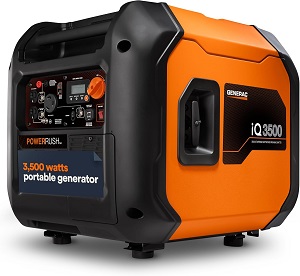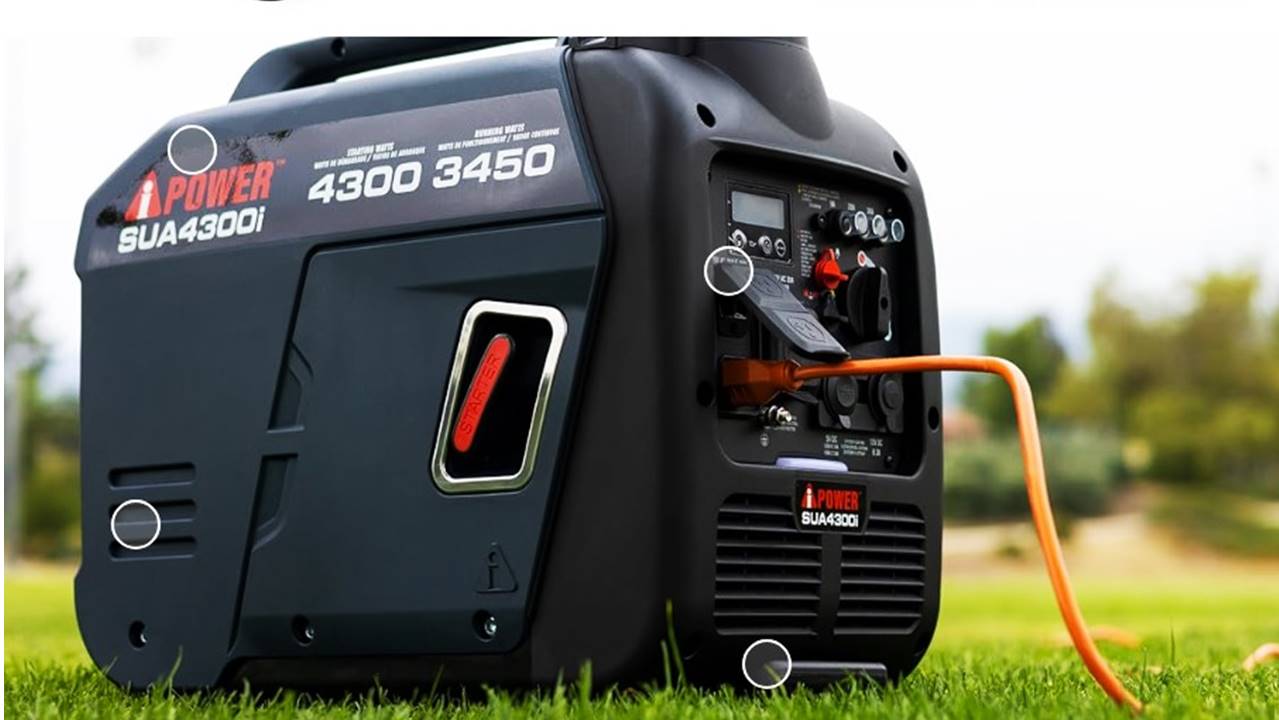
TOP 1. Aceup Energy 4000 Watt Portable Inverter Generator
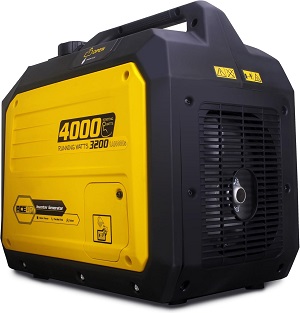
The Aceup Energy 4000 Watt Portable Inverter Generator is a powerful and versatile solution for home backup, outdoor activities, and RVs. With a 4000-watt output, it’s capable of running essential appliances and electronics during outages or while camping. This gas-powered generator features inverter technology, providing clean, stable power that’s safe for sensitive devices like laptops and mobile phones. Designed for quiet operation, it minimizes noise, making it ideal for both residential use and outdoor environments. RV-ready and EPA compliant, the Aceup generator meets environmental standards and is built for easy portability. Reliable and efficient, it’s a solid choice for those needing a dependable power source in emergencies or for recreational use.
Specifications:
- Power Output: 4000 watts
- Fuel Type: Gasoline
- Noise Level: Quiet operation
- Additional Features: Inverter technology, EPA compliant, RV-ready
Pros:
- High wattage suitable for powering multiple appliances
- Clean, stable power for sensitive electronics
- Quiet and efficient for home or outdoor use
- Easy portability with a compact design
Cons:
- May use more fuel than smaller models
- Slightly heavier than lower-wattage options
TOP 2. A-iPower Portable Inverter Generator
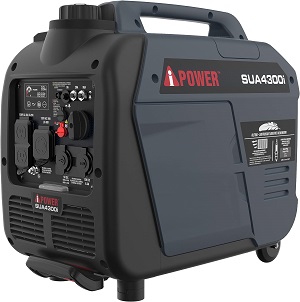
The A-iPower SUA4300i Portable Inverter Generator is a robust and versatile power solution, perfect for home backup, RVs, camping, and tailgating. Delivering 4300 starting watts, it provides ample power for running essential appliances and electronics, with clean and stable energy suitable for sensitive devices. This generator is both EPA and CARB compliant, featuring a built-in CO sensor for enhanced safety, automatically shutting down if CO levels become unsafe. Designed with portability in mind, it’s lightweight with a telescopic handle for easy transport. The generator operates quietly, making it suitable for residential areas and outdoor events. Reliable, efficient, and RV-ready, the A-iPower SUA4300i is a convenient power source for any situation requiring backup energy.
Specifications:
- Power Output: 4300 starting watts
- Fuel Type: Gasoline
- Noise Level: Quiet operation
- Additional Features: CO sensor for safety, EPA and CARB compliant, RV-ready, telescopic handle
Pros:
- High starting wattage ideal for larger appliances
- Safe operation with CO sensor technology
- Lightweight with a telescopic handle for easy transport
- Suitable for both indoor backup and outdoor activities
Cons:
- Slightly bulkier despite portable features
- Higher wattage may increase fuel consumption
T0P 3. WEN 3600-Watt Portable Inverter Generator
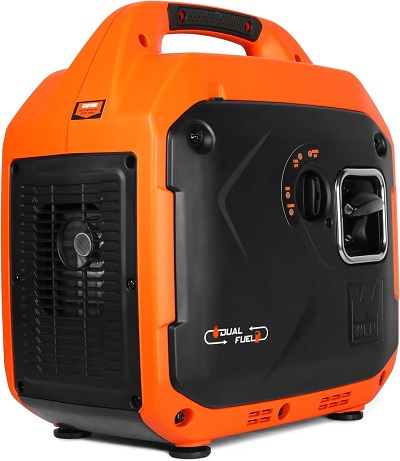
The WEN 56360i 3600-Watt Portable Inverter Generator offers a compact, quiet, and efficient power solution for home backup, RVs, and outdoor adventures. It provides 3600 starting watts with clean, stable energy, making it safe for sensitive electronics like phones, tablets, and laptops. The generator’s quiet operation ensures minimal noise disturbance, while its lightweight design and RV-ready features make it ideal for travel and camping. Equipped with a fuel shut-off feature, it allows the generator to use up any remaining fuel in the carburetor before shutting down, helping to prevent fuel-related issues and prolong engine life. The WEN 56360i is a reliable, user-friendly choice for both emergencies and recreational use.
Specifications:
- Power Output: 3600 starting watts
- Fuel Type: Gasoline
- Noise Level: Quiet operation
- Additional Features: Fuel shut-off, RV-ready, lightweight design
Pros:
- Reliable power for sensitive electronics with inverter technology
- Fuel shut-off feature to help prevent fuel issues
- Ideal for both residential and recreational use
Cons:
- Moderate wattage may limit usage to smaller appliances
- Fewer advanced safety features compared to higher-end models
TOP 4. Champion Power Equipment Portable Inverter Genera
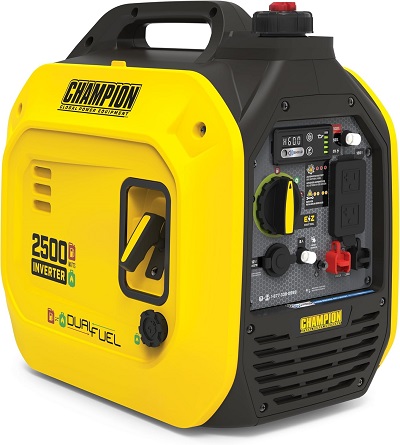
The Champion Power Equipment 2500-Watt Ultralight Portable Inverter Generator combines power and portability, making it an ideal companion for camping, tailgating, and home backup. Weighing only 39 pounds, this ultralight model is easy to transport and store. It delivers 2500 starting watts of clean, reliable power, safe for sensitive electronics. The Quiet Technology reduces noise levels, operating at only 53 dBA, making it suitable for residential or outdoor use. With the added safety of CO Shield technology, the generator automatically shuts off if harmful CO levels are detected, providing peace of mind. Efficient and versatile, this Champion inverter generator offers a dependable power source for any on-the-go or backup power needs.
Specifications:
- Power Output: 2500 starting watts
- Fuel Type: Gasoline
- Noise Level: 53 dBA (quiet)
- Additional Features: CO Shield technology, lightweight at 39 pounds
Pros:
- Ultra-lightweight, making it highly portable
- Very quiet, suitable for camping and residential areas
- Efficient and reliable for moderate power needs
Cons:
- Lower wattage, may not support high-wattage appliances
- Limited fuel capacity may require refueling for extended use
TOP 5. Honda EU2200ITAN Portable Inverter Generator
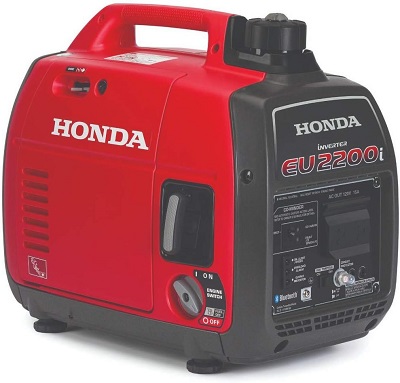
The Honda EU2200ITAN is a premium 2200-watt portable inverter generator designed for quiet and efficient operation. With a 120-volt output, it’s perfect for a variety of applications, including camping, tailgating, and home backup. The EU2200ITAN operates at a remarkably low noise level of 48 dBA, making it one of the quietest generators in its class—ideal for use in residential areas or while enjoying nature. Equipped with Honda’s CO-Minder technology, this generator continuously monitors carbon monoxide levels and automatically shuts off if they become unsafe, providing added peace of mind. Its compact design and lightweight construction make it easy to transport, while the Eco-Throttle system ensures optimal fuel efficiency and longer run times. Reliable and durable, the Honda EU2200ITAN is an excellent choice for anyone needing portable power without the noise.
Specifications:
- Power Output: 2200 watts
- Fuel Type: Gasoline
- Noise Level: 48 dBA (extremely quiet)
- Additional Features: CO-Minder technology, Eco-Throttle system for fuel efficiency
Pros:
- Ultra-quiet operation, ideal for noise-sensitive environments
- Eco-Throttle ensures fuel efficiency and extended runtime
- Reliable Honda build quality for durability
Cons:
- Lower wattage, best suited for smaller appliances
- Premium price point due to brand and build quality
Buying guide for The Best Portable Inverter Generator
1. Power Output and Capacity
- Rated Wattage vs. Surge Wattage: Rated wattage is the continuous power the generator can supply, while surge wattage is the maximum power it can handle for a short time, usually when starting appliances. Consider both for devices with high startup power needs, like refrigerators.
- Wattage Needs: For camping, 1,000–2,000 watts is often enough. For home backup (e.g., fridge, lights, some electronics), look at 2,000–3,500 watts.
2. Fuel Type and Runtime
- Gasoline: Most portable inverters run on gasoline, which is widely available. However, gas needs to be stored and can degrade over time.
- Dual-Fuel Options: Some generators run on both gasoline and propane, offering versatility. Propane has a longer shelf life and emits fewer fumes but may reduce power output slightly.
- Runtime: Look for a model that can run 8+ hours on a full tank at 25% load for overnight use.
3. Portability and Size
- Weight: Inverter generators are typically lighter than traditional generators, but weight varies. A 2,000-watt generator might weigh 40–50 pounds, while a 3,500-watt one could be closer to 100 pounds.
- Wheels and Handles: Look for units with wheels and a telescopic handle if you need to transport it often, especially for larger models.
4. Noise Level
- Quiet Operation: Inverter generators are generally quieter than traditional generators, making them ideal for camping and home use. Look for models rated around 50–60 dB at 25% load. Anything below 60 dB is comfortable for conversation.
5. Parallel Capability
- Doubling Power Output: Many inverter generators allow you to connect two units in parallel to increase power output, ideal for situations where extra wattage is occasionally needed without purchasing a larger, heavier generator.
6. THD (Total Harmonic Distortion)
- Stable Power for Electronics: A low THD (usually under 3%) is essential if you plan to power sensitive electronics like laptops, phones, and other devices. Inverter generators are known for stable, clean power output.
7. Safety Features
- Low-Oil Shutoff: Protects the engine by automatically shutting down if oil levels drop too low.
- Overload Protection: Prevents overheating and damage by shutting down if the generator is overloaded.
- Carbon Monoxide Detection: Some models, like those from Generac, feature CO sensors that shut off the generator if CO levels become dangerous.
8. Control Panel Features
- Multiple Outlets: Look for standard 120V AC outlets, USB ports for charging small devices, and possibly a 12V DC outlet.
- Fuel Gauge and LED Indicators: These help monitor fuel levels and status, improving usability.
- Remote Start or Electric Start: Easier than pull-starting, especially useful for larger units.
Portable Inverter Generator FAQ
1. What is a portable inverter generator?
A portable inverter generator is a compact generator that produces clean, stable power, ideal for sensitive electronics like laptops, smartphones, and medical equipment. Unlike conventional generators, it uses an inverter to convert direct current (DC) to alternating current (AC) with smooth, consistent power output.
2. What are the benefits of a portable inverter generator?
- Clean Power Output: Inverter generators deliver a steady, clean power ideal for electronics.
- Quiet Operation: These generators are typically quieter than conventional ones, thanks to efficient engines and insulated casings.
- Fuel Efficiency: Inverter technology adjusts the engine speed based on demand, making it fuel-efficient.
- Compact and Lightweight: They are designed to be easy to carry and store, perfect for camping, tailgating, or emergencies.
3. How is a portable inverter generator different from a conventional generator?
- Power Quality: Inverter generators produce clean, stable power with low harmonic distortion, unlike conventional generators.
- Size and Weight: Inverter models are lighter and easier to transport.
- Fuel Efficiency and Noise: They adjust power output based on load, reducing fuel consumption and noise, while conventional generators run at full power constantly.
4. What should I consider when buying a portable inverter generator?
- Power Output (Wattage): Choose based on your power needs. A small model (1000-2000 watts) can power lights and small electronics, while a larger model (3000-4000 watts) can handle more demanding appliances.
- Runtime: Check the fuel tank capacity and runtime, especially if you plan to use it for extended periods.
- Noise Level: Look for models with a low decibel rating (50-60 dB) if noise is a concern.
- Portability: Weight and handle design matter if you plan to move it often.
- Parallel Capability: Some models let you connect two generators in parallel, doubling your power output.
5. What are the common applications for portable inverter generators?
- Camping and Tailgating: Provides power for small appliances, lights, and electronics.
- Home Backup: Can power essentials during a power outage, like lights, refrigerators, and communication devices.
- Worksites: Useful for tools, though heavier equipment may require higher wattage.
- Outdoor Events: Ideal for powering small sound systems, lighting, and other equipment.
6. How loud is a portable inverter generator?
Noise levels vary, but inverter generators are generally quieter, around 50-60 decibels, which is roughly the sound level of a normal conversation. Quiet models are ideal for camping or residential areas where noise control is important.
7. How much power do I need from an inverter generator?
- For Small Electronics: A 1000-2000 watt model can handle devices like phones, laptops, and small appliances.
- For Larger Appliances: A 3000-watt or higher model is necessary for items like refrigerators, microwaves, and small air conditioners.
- Parallel Kits: Some smaller models can be connected in parallel to combine their wattage, offering greater flexibility.